
Play Wolf Run Now!
Home → Strategy
Wolf Run Strategy
Approaching Wolf Run sensibly
The theoretical return to player stands at 94.98% for the IGT slot Wolf Run, which establishes a house edge of 5.02% over extended play. This percentage indicates that the casino retains roughly five cents from every euro wagered across millions of spins, rather than predicting short-term results. Players should view this metric as a long-run statistical average rather than a guarantee for individual sessions. The medium volatility further suggests that wins will occur with moderate frequency but vary in size significantly.
Comparing Wolf Run to other titles reveals its position within the developer's portfolio. Triple Diamond offers a slightly higher RTP of 95.06%, while Da Vinci Diamonds provides a much larger maximum win potential of 5,000x. These differences highlight that game selection directly impacts the mathematical expectation and risk profile of the bankroll. Understanding these variations allows players to choose games that align with their specific tolerance for variance and expected return.
The bonus structure offers a 300% welcome bonus up to €2,000 plus 100 free spins, which can extend playtime if used correctly. However, high rollers must consider how such bonuses interact with the 94.98% RTP of the underlying slot mechanics. Wagering requirements often mandate significant turnover before funds become withdrawable, effectively increasing the total amount risked against the house edge. Strategic deployment of these funds requires careful calculation of the expected loss during the clearance process.
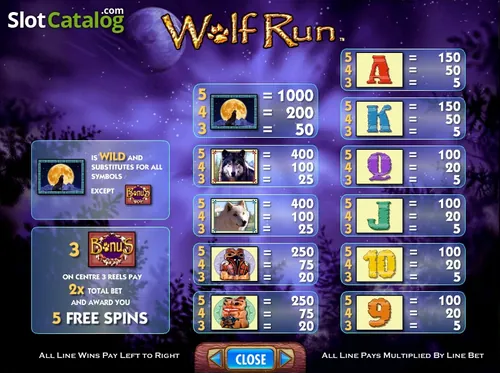
Bankroll rules that hold up
A robust bankroll management strategy begins by defining the total capital allocated for gaming activities, known as the bankroll. For high stakes on Wolf Run, setting aside a substantial sum prevents emotional decision-making during inevitable losing streaks. The medium volatility of the slot means that balance fluctuations will be noticeable but not as extreme as in high-variance games. This stability allows for longer session durations without requiring an exponentially larger initial deposit compared to riskier alternatives.
Flat betting, where the stake remains constant per spin, is a disciplined approach that preserves the bankroll more effectively than progressive systems. Raising stakes after losses does not alter the built-in house edge of 5.02% and only accelerates the depletion of funds. By maintaining a fixed bet size relative to the total bankroll, players can withstand the natural variance of the 40 paylines. This method ensures that no single spin or short sequence of spins threatens the overall financial plan.
Calculating the cost of play involves multiplying the bet size by the number of spins intended per hour. A high roller wagering €100 per spin on Wolf Run engages with the 5-reel/4-row grid at a rapid pace. If the player executes 600 spins in an hour, the total action reaches €60,000, exposing the bankroll to significant mathematical erosion. Tracking this hourly burn rate against the available funds provides a realistic timeline for when a session should conclude based on budget constraints.
Bet sizing against volatility
Wolf Run features a medium volatility rating, which balances the frequency of wins with the size of payouts. This characteristic suits high rollers who prefer sustained engagement over rare, massive jackpots found in low-frequency slots. The maximum win cap of 1000x applies to the total bet, meaning a €100 wager could theoretically yield €100,000. However, achieving this requires hitting specific combinations of stacked wilds and free spins, which are subject to random chance. Understanding this cap helps in setting realistic expectations for potential returns during any given session.
The 40 paylines offer multiple opportunities for winning combinations on each spin, influencing the optimal bet distribution. High rollers might distribute their wagers across all active lines to maximize coverage of the symbol space. Since the game uses a 5x4 grid, the presence of stacked wilds can create substantial payouts even on lower-value symbols. Adjusting the bet level to fit the bankroll ensures that the player can survive the dry spells inherent in medium volatility environments without prematurely exhausting funds.
Comparing Wolf Run to Golden Goddess, which has a low-medium volatility and a similar 1,000x max win, highlights subtle differences in risk. Golden Goddess may provide more frequent smaller wins due to its lower variance profile, whereas Wolf Run’s medium volatility introduces greater swings. High rollers must decide whether they prefer the steadier progression of the former or the potentially sharper peaks and troughs of the latter. This choice dictates how aggressively one can size bets relative to the total bankroll without violating risk management principles.
Session limits worth setting
Establishing a strict time limit for gaming sessions helps mitigate the fatigue-induced errors that lead to poor decision-making. High rollers playing Wolf Run might allocate two hours for intense focus, recognizing that the medium volatility requires patience. During this period, the player monitors the 94.98% RTP performance without chasing deviations. Setting a timer ensures that the session ends regardless of the current balance, preventing the temptation to extend play beyond planned boundaries.
A loss limit serves as a hard stop to prevent catastrophic bankroll erosion during unlucky streaks. For instance, a high roller might set a daily loss ceiling at 20% of the total allocated bankroll. Once this threshold is reached, all activity on Wolf Run must cease immediately, preserving the remaining capital for future opportunities. This rule enforces discipline and acknowledges that the house edge of 5.02% will eventually manifest in every session given enough spins.
Win goals provide a positive exit strategy by encouraging players to lock in profits during favorable variance periods. If a player hits a significant win, such as triggering the free spins bonus with doubled wins, they might decide to secure half the profit. Taking partial withdrawals reduces the exposure to the house edge on the remaining balance. This proactive approach transforms theoretical returns into realized gains, protecting the player from giving back winnings to the casino through continued play.
Why chasing losses fails
Chasing losses involves increasing bet sizes to recover previous deficits, a strategy that fundamentally misunderstands the independence of each spin. In Wolf Run, the outcome of any given spin is determined by a random number generator, unaffected by prior results. Increasing the stake after a loss does not improve the probability of hitting a winning combination on the 40 paylines. This behavior merely accelerates the application of the 5.02% house edge against a shrinking bankroll, leading to faster ruin.
Progressive staking systems, such as Martingale, are mathematically flawed because table limits and finite bankrolls prevent infinite doubling. A high roller attempting to double down on losses in Wolf Run will eventually encounter a losing streak that exceeds their available funds. The medium volatility of the slot means that long losing sequences are statistically probable over time. No betting system can overcome the built-in mathematical advantage held by the casino, regardless of the stake size or pattern.
The psychological urge to recoup losses is a common trap that leads to irrational decision-making and emotional distress. Instead of adjusting bets to chase results, players should adhere to their pre-determined flat betting strategy. Accepting losses as part of the cost of entertainment helps maintain a clear perspective on the gaming experience. Recognizing that the 94.98% RTP represents a long-term average rather than a short-term promise allows for more rational and sustainable gameplay habits.
Wolf Run: key facts
| Parameter | Value |
|---|---|
| Game | Wolf Run |
| Studio | IGT |
| RTP | 94.98% |
| House edge | 5.02% |
| Volatility | medium |
| Max win | 1000x |
| Reels | 5 |
| Paylines / ways | 40 |
Common systems and their limits
The maximum win of Wolf Run is capped at 1000x the stake, a hard limit set by developer IGT that restricts high roller payouts regardless of bet size. This ceiling stands in stark contrast to Le Cowboy by Hacksaw Gaming, which offers a max win of 25000x, providing significantly higher upside potential for aggressive bankrolls. A player betting 100 € per spin would hit the Wolf Run cap at 100,000 €, whereas the same wager on Le Cowboy could theoretically yield 2,500,000 €. The structural difference in max win caps fundamentally alters the risk-reward profile for large stakes.
Volatility levels vary drastically across titles, with Wolf Run classified as medium volatility compared to the very high volatility of The Dog House Megaways by Pragmatic Play. High volatility games like Book of Dead from Play'n GO feature fewer but larger wins, suiting players who can withstand long dry spells between payouts. Wolf Run's medium variance offers more frequent returns, which helps preserve a high roller's bankroll during extended sessions. This balance allows for sustained play without the extreme drawdowns associated with very high volatility slots.
The theoretical RTP of Wolf Run sits at 94.98%, resulting in a house edge of 5.02% over an infinite number of spins. This return rate is lower than the 96.71% RTP offered by Big Bass Splash from Pragmatic Play, meaning Wolf Run retains a larger percentage of total wagers. For a high roller placing 1,000,000 € in total bets, this edge translates to an expected loss of 50,200 € versus 32,900 € on Big Bass Splash. The mathematical disadvantage accumulates faster on Wolf Run due to its higher house edge.
Flat betting explained
Flat betting involves maintaining a constant stake amount on every single spin throughout the entire gaming session. This strategy prevents rapid bankroll depletion by eliminating the variance caused by increasing wagers after losses or wins. For a high roller with a 50,000 € bankroll betting 100 € per spin, flat betting allows for 500 consecutive rounds regardless of outcome. This consistency provides predictable exposure to the 5.02% house edge inherent in the Wolf Run slot mechanics.
The 40 paylines on Wolf Run require specific alignment of symbols to generate wins, making consistent stake sizing crucial for managing line coverage costs. Unlike progressive systems, flat betting does not alter the built-in mathematical edge of the game over time. A player betting 50 € per spin on Wolf Run will experience the same average loss per hour as one betting 10 € per spin, just at five times the speed. The total cost of play is determined by the volume of spins rather than the betting pattern.
High rollers often use flat betting to extend session duration while testing bonus features like stacked wilds and free spins. The 1000x max win on Wolf Run is achieved through these features rather than through escalating base game bets. By keeping the stake fixed, a player ensures that the cost of triggering the bonus round remains within a predefined budget. This approach isolates the entertainment value of the game from financial risk management.
Progressive staking risks
Progressive staking involves raising the bet size after a loss, a method that increases the rate of bankroll erosion without changing the house edge. In Wolf Run, which has a 5.02% house edge, doubling the stake after each loss accelerates the path to ruin during a losing streak. A sequence of ten losses starting with a 100 € bet requires a final wager of 102,400 € under a standard Martingale progression. This exponential growth quickly exceeds the practical limits of most casino tables and slot maximum bet restrictions.
The maximum win cap of 1000x on Wolf Run limits the recovery potential of progressive systems when a big win finally occurs. If a high roller is up 50,000 € using a progressive strategy and hits the 1000x cap on a 100 € bet, they only gain 100,000 € in total. However, if the streak continues downward before the win, the required stake to recover previous losses may exceed the 1000x multiplier payout. The cap effectively neutralizes the recovery logic of many common betting systems.
Bankroll requirements for progressive staking are substantially higher than those for flat betting due to the need to cover exponential bet increases. A player using a 1-3-2-6 progression on Wolf Run must have sufficient funds to sustain multiple consecutive losses without hitting table limits. With a medium volatility slot like Wolf Run, losing streaks can persist longer than expected, straining even large reserves. The mathematical expectation remains negative regardless of the staking method employed.
What the maths actually allows
The 94.98% RTP of Wolf Run indicates that for every 100 € wagered, the game returns 94.98 € to players over millions of spins. This theoretical return applies to the aggregate pool of all bets, not to individual sessions or high roller deposits. A high roller depositing 10,000 € and playing until bankruptcy should expect to lose approximately 502 € based on the 5.02% house edge. This figure represents the statistical average cost of entertainment for the volume of play involved.
Medium volatility in Wolf Run suggests a balanced distribution of wins, neither too frequent nor too rare, affecting short-term variance expectations. Compared to the very high volatility of The Dog House Megaways, Wolf Run offers more regular smaller payouts that sustain the bankroll. This characteristic allows high rollers to maintain their stake levels for longer periods before needing to withdraw or add funds. The variance profile supports steady play rather than the all-or-nothing dynamics of high-variance titles.
The 40 fixed paylines on Wolf Run mean that every spin covers the same number of potential winning combinations without variable line selection. This structure simplifies the calculation of expected loss per spin by multiplying the stake by the house edge directly. A bet of 200 € per spin results in an expected hourly loss of roughly 1,200 € assuming 60 spins per minute, though actual speeds vary. The fixed payline count removes strategic choices regarding line activation, focusing attention solely on stake size.
Reading variance honestly
Variance in Wolf Run is characterized by medium volatility, meaning win sizes fluctuate around the average return without extreme outliers. High rollers must account for this variance when planning their bankroll allocation, as medium volatility still produces significant swings. Unlike Le Cowboy with its 25000x max win, Wolf Run's 1000x cap limits the magnitude of positive variance events. Players seeking massive jackpots may find the variance profile insufficient for their risk appetite.
The 5-reel/4-row grid layout of Wolf Run creates 40 ways to win, influencing the frequency of small victories during gameplay. This configuration differs from the 6x5 reels of Le Cowboy, which generates hundreds of thousands of ways but with different win probabilities. The structured grid of Wolf Run provides a predictable framework for analyzing hit frequencies and payout distributions. Understanding this layout helps players interpret why certain sessions feel volatile despite the medium classification.
Bonuses such as free spins with doubled wins in Wolf Run introduce temporary shifts in expected value during the feature trigger. These features do not change the overall RTP of 94.98% but concentrate returns into specific segments of the session. A high roller experiencing a free spins round may see their bankroll increase rapidly, only to revert to the mean afterward. Recognizing these temporary variances prevents misinterpretation of short-term results as long-term profitability.
Learning the game in demo first
The Wolf Run slot from IGT operates on a 5-reel layout with 40 paylines, providing a structured framework for high rollers to test betting patterns without financial risk. This grid configuration allows players to observe how stacked wilds and free spins bonus rounds interact before committing real funds. Practicing in demo mode helps identify optimal stake levels that align with the medium volatility profile. The absence of real-money pressure during this phase ensures that strategic adjustments remain purely analytical.
The theoretical RTP of 94.98% indicates a house edge of 5.02%, which remains constant regardless of the demo environment. High rollers can use this figure to calculate expected losses over thousands of spins, establishing a baseline for bankroll management. Unlike crash games, Wolf Run lacks a cash-out button, meaning outcomes are determined solely by the reel stops. Understanding this mechanical limitation is crucial for managing expectations during extended play sessions.
Comparing Wolf Run to other titles like Wild Bounty Showdown by PG Soft highlights differences in max win potential, which stands at 1000x for Wolf Run versus 5000x for the competitor. This comparison helps players assess whether the lower maximum payout is offset by more frequent medium-volatility hits. The nature theme and 4-row grid provide visual cues that do not influence RNG outcomes but aid in session tracking. Players should note these structural elements when transitioning from free play to real-money wagers.
Adjusting stakes to your budget
A high roller allocating €2,000 for a session must determine stake sizes relative to the 40 paylines active in Wolf Run. Betting €1 per spin results in a total bet of €40 per round, allowing approximately 50 spins from the initial bankroll. This flat betting approach preserves capital longer than progressive staking methods, which increase stakes after losses and accelerate ruin. Calculating spins-per-bankroll helps maintain discipline during volatile stretches.
The maximum win cap of 1000x sets a ceiling on potential returns, requiring high rollers to size bets accordingly to maximize exposure to bonus features. A €5 stake yields a theoretical maximum of €5,000, but achieving this requires landing specific symbol combinations across the 5x4 grid. Comparing this to Sizzling Hot Deluxe’s 5000x max win shows Wolf Run offers smaller top payouts but potentially more consistent medium-tier wins. Stake adjustment should reflect the desire for frequency versus magnitude of payouts.
Bankroll depletion rates vary based on the 5.02% house edge applied to total turnover generated by each spin. At a €10 stake per spin (€400 turnover), the expected hourly loss depends on spins-per-hour speed, often exceeding 60 for online slots. High rollers might reduce stakes to €0.50 to extend playtime while still qualifying for significant bonus triggers. Monitoring turnover against the 300% welcome bonus up to €2,000 ensures wagering requirements are met efficiently without excessive risk.
Recognising a bad session
A session becomes statistically unfavorable when cumulative losses exceed the projected variance for Wolf Run’s medium volatility setting. If a player experiences 20 consecutive non-winning spins at a €2 stake, the bankroll shrinks by €800, representing a significant deviation from the mean. Tracking this drop against the initial deposit helps identify when luck has turned against the expected RTP of 94.98%. Recognizing these patterns prevents chasing losses through increased betting.
Comparing current performance to Buffalo by Aristocrat Gaming, which shares similar medium-high volatility and a 1200x max win, reveals if Wolf Run’s hit frequency is unusually low. If bonuses fail to trigger within the expected range, the session may be underperforming relative to historical data. High rollers should monitor the time elapsed between free spins features to detect anomalies in RNG behavior. Adjusting stakes downward or pausing play can mitigate further erosion of the bankroll during such periods.
The 100 free spins included with the 300% welcome bonus up to €2,000 offer a buffer against early-session losses. Utilizing these spins on fixed stakes allows players to test the game’s mechanics without additional out-of-pocket expense. If the free spins yield minimal returns, it signals that the session’s negative variance is likely to persist. High rollers should treat this bonus as a distinct trial period separate from their primary bankroll strategy.
Stopping while ahead
High rollers should define a profit target before starting, such as doubling the initial deposit of €1,000 to €2,000, given Wolf Run’s 1000x max win potential. Achieving a 2x return represents a rare but possible outcome due to the game’s medium volatility and bonus features. Stopping upon reaching this threshold locks in gains and prevents reversal due to the inevitable regression to the mean RTP of 94.98%. Discipline in exiting profitable sessions is critical for long-term sustainability.
Comparing Wolf Run’s 1000x max win to Sweet Bonanza Super Scatter’s 50000x highlight why holding onto large wins is prudent; the latter’s higher volatility demands greater tolerance for drawdowns. If a player hits a substantial win in Wolf Run, continuing to play risks losing those profits to the 5.02% house edge. Cash-outs should be processed immediately to secure the gain, as no cash-out button exists within the game interface itself. Withdrawal times depend on payment provider policies, typically ranging from instant to several working days.
The wagering requirement associated with the 300% welcome bonus up to €2,000 must be cleared before withdrawing any winnings derived from bonus funds. For example, a €2,000 bonus with x40 wagering requires €80,000 in turnover, which can deplete a bankroll quickly if stakes are too high. High rollers should calculate the cost of meeting this requirement against their remaining balance to decide if continuation is mathematically viable. Stopping once the target is reached avoids unnecessary exposure to the house edge.
Responsible play in practice
Setting a daily loss limit equal to 10% of the total bankroll, such as €100 from a €1,000 fund, prevents catastrophic depletion during unlucky streaks. Wolf Run’s 40 paylines mean each spin costs €40 at a €1 stake, so three losing spins consume 3% of the daily limit. Tracking these micro-losses helps maintain awareness of spending velocity. High rollers must adhere to these limits strictly, as the medium volatility can create false confidence during brief winning runs.
Time limits complement financial controls by preventing fatigue-induced errors in judgment. Playing Wolf Run for more than two hours at a steady pace can lead to repetitive betting patterns that ignore changing variance conditions. Using timer alerts ensures breaks occur before decision-making quality declines. This practice aligns with responsible gaming standards promoted by independent analysts who prioritize player protection over casino retention.
Utilizing self-exclusion tools provided by licensed operators adds an extra layer of security for high rollers prone to impulsive behavior. After a bad session characterized by rapid bankroll erosion despite adherence to flat betting, a 24-hour cool-off period allows emotional detachment. Reviewing session statistics, including total spins and net loss, provides objective data for future strategy adjustments. Responsible play involves recognizing when to step away entirely rather than attempting to recover losses through higher stakes.
DemoRTP & VolatilitySymbols & PayoutsBonus FeaturesStrategyBonusesMobileDownload & AppMax WinSimilar GamesReviewFAQSitemap
Wolf Run 2026